US proposal for trans-Africa railway targets copper and cobalt supply chains

The US is exploring opportunities to extend the Lobito Corridor Railway to Tanzania, creating a ‘Trans-Africa Corridor’ to connect the Central African Copperbelt to both the Atlantic and Indian Oceans.
Speaking in Tanzania in late August, Helaina Matza, Acting Special Coordinator for the Partnership for Global Infrastructure and Investment (PGI), said the US’ ‘mission’ was to relaunch its partnership with the Democratic Republic of Congo (DRC) and engage with the public and private sector in Tanzania towards the goal of extending the railway to the Indian Ocean.
The Lobito Corridor Railway marks a high point of US re-engagement in Africa, aiming to boost American soft power and counter China’s hegemonic position in the Central African Copperbelt.
The US and its allies, however, are facing an uphill battle in their strategy to wrest control of Africa’s critical minerals from China. Chinese firms have invested heavily in mining projects in Africa over the last decade, locking upcopper-cobalt assets in the DRC as Western miners have largely backed away from building new projects in the Copperbelt.
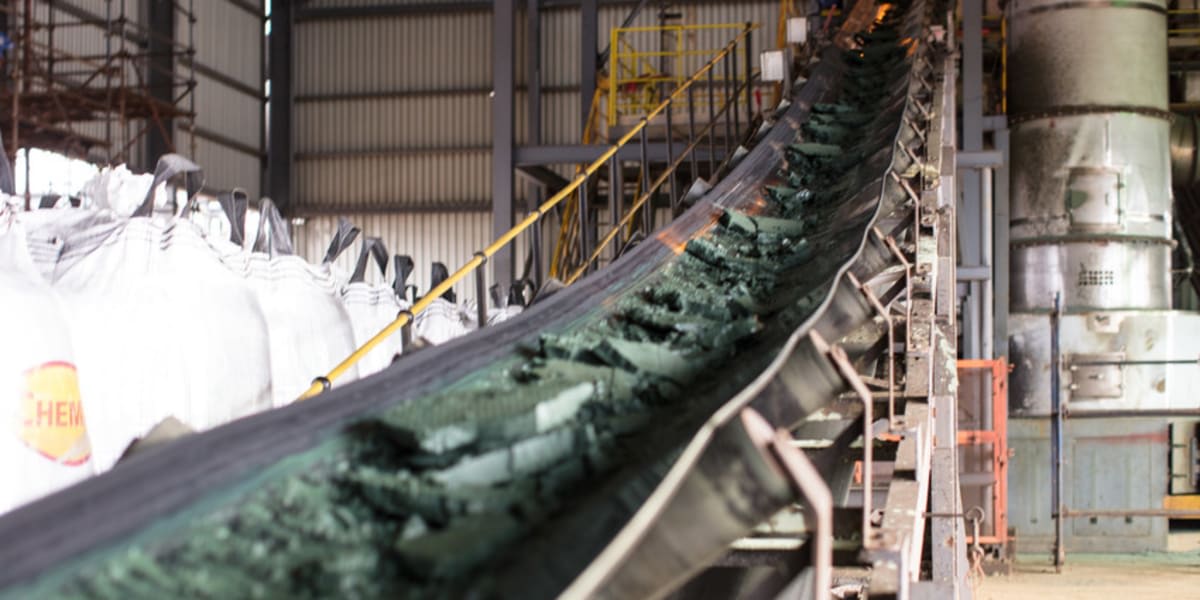
Benchmark data demonstrates that Chinese firms now have financial stakes in 18 of the 25 cobalt-producing assets in the DRC, with Chinese-financed supply set to account for over 60% of the country’s cobalt production in 2024.
The same story rings true for Africa’s nascent lithium industry: Chinese backed projects are set to account for 95% of the continent’s mined output in 2024,according to the Benchmark Lithium Forecast.
What is the Lobito Corridor?
The Lobito Corridor is a 1,300 km stretch of railway connecting the port of Lobito, on the Atlantic coast of Angola, with the city of Kolwezi in the DRC.
Since 2023, the US and its partners have been supporting the refurbishment of the railway’s existing infrastructure to open up a new transport route to export critical minerals such as copper and cobalt from Africa’s Atlantic coast to North America and Europe.

The railway is touted as a future gamechanger for exports, designed to cut transportation time from the DRC to port from up to 50 days to 36 hours. The first shipment of copper destined for the US left port in Angola in August, although railway capacity remains too small to make a meaningful difference for most DRC-produced copper.
A feasibility study on a second-phase greenfield expansion of the railway to connect the Zambian Copperbelt is expected to conclude in November, with a view to begin construction in 2026. Plans to extend the railway to Tanzania represent a possible third-stage expansion.
Lobito Corridor seeks to unlock local value-add
Financed through a combination of public and private sector investment, the US and European Union (EU) hope the Lobito Corridor can offer an alternative to China’s debt-laden Belt and Road Initiative (BRI) by generating local value-add in the African Copperbelt.
“By creating the infrastructure necessary to address the current logistical bottlenecks and attract private investment, the Lobito Corridor project is designed to facilitate the development of an industrial cluster in the African Copperbelt,” said Bryan Bille, principal policy analyst at Benchmark.
“The plans bode well for theDRC and Zambia’s ambitions of value-adding their critical mineral resourcesto create an EV ecosystem in the region,” Bille continued.
Acting Special Coordinator Matza highlighted Tanzanian nickel junior Lifezone Metals as an example of how the US’ plans to extend the railway to the Indian Ocean could help to generate value-added industries.
“It’s more than helping to support bringing online an important nickel project…it creates opportunities for processing here in the country – the nickel products coming out – but hopefully more feedstock from other parts of the country and the region, while investing at the same time in training local Tanzanians to participate in every part of the value chain of that industry,” she said.
Geopolitics in the copperbelt
The African Copperbelt is emerging as a key flashpoint in geopolitical competition between the West and China, and US hopes of leveraging some of the existing infrastructure of the Tazara railway —spanning Zambia and Tanzania— are set to position it in direct competition with China.
At the recent Forum on China–Africa Cooperation in Beijing, where over 50 African leaders gathered, President Xi Jinping pledged an additional $51 billion for African infrastructure projects, with $1 billion designated for the modernisation of the Tazara railway.
During the summit, China, Tanzania, and Zambia signed a memorandum of understanding to rehabilitate the railway, signalling China’s intent to develop an alternative to the western-backed Lobito Corridor.
A Chinese state-owned company will reportedly finalise an agreement to take over the railway, connecting the Zambian copperbelt to the Tanzanian port of Dar es Salaam, by the end of 2024, with the upgrade taking around 2 years to complete.
Benchmark’s Cobalt Forecast now includes an additional Policy Report, tracking geopolitical developments shaping the cobalt supply chain.
This is one of the several enhancements made to Benchmark’s Cobalt Forecast, which provides a comprehensive view of supply, demand, costs and prices out to 2040.
Contact our experts to learn more or request a demonstration.
 >
>  >
>  >
>  >
>  >
>  >
>  >
>  >
>