“The potential for DLE to make a contribution to the lithium growth story is immense.” Q&A with ILiAD CEO Samuel Moore
At the end of last year lithium major Livent (now Arcadium Lithium) bought a minority stake in ILiAD Technologies, a California-based company that has spent years developing technology to producelithiumfrom various brines usingDirect Lithium Extraction.
The company’s adsorption technology has been developed over seven years of research and pilot testing with its parent company Energy Source Minerals, a developer of projects in the Salton Sea in California. It has also delivered its DLE technology to other companies such as Kansas-based Compass Minerals.
The process can be used to recover high-purity lithium chloride from lithium-ladenbrine resourcesaround the world.
Arcadium Lithium said it could deploy ILiAD’s technology as soon as 2025 in Argentina.
Benchmark Source sat down with ILiAD’s chief executive Samuel Moore to learn more.
Could you describe your technology for us?
ILiADstands for Integrated Lithium Adsorption Desorption. ILiAD rolls off the tongue a little bit better than that, but maybe not. It lives in the adsorptionto desorption family of DLE. And adsorption to desorption does seem to be gaining traction. A lot of industries seem to be centering around that core family of DLE.
What we’ve done with ILiAD is really two things: we’ve got a proprietary adsorbent media that was developed by Chuck Marston. Chuck spent his career at Dow Chemical and was part of the original team that helped develop the adsorbent and the process that is now used by Arcadium Lithium. And he has improved the aluminium-based adsorbent that we use and we’ve got a proprietary recipe that’s very effective, and it has a very long life.
And if you think about one of the major costs in a DLE project, it’s replacement – how long it lasts, how many cycles you can get out of it before you have to replace it. That makes a meaningful difference to economics.
The second thing is we’ve married that adsorbent to our continuous counter-current circuit, and what that does is it takes what would traditionally be a very large fixed base column and splits it into multiple smaller columns. And what that allows us to do is run every single part of the process simultaneously, continuously. And it just means that you don’t have any adsorbent that is not doing anything. It’s always working. And that’s a step change in efficiency.
That means you can have a lower inventory, you don’t need as much adsorbent as you’d otherwise require. You don’t need as much energy; you don’t need as much water. So you just get all of these step change benefits, in the costs and the way the system works.
The other benefit is we’re able to tune the system very precisely so we can actually target the lowest impurities possible, the highest recoveries possible or maybe the lowest water use possible – you can actually balance between those competing factors.
We almost universally get recoveries over 90%. We get very high impurity rejections and have very efficient water use. So we believe the marrying of that proprietary adsorbent with the continuous counter carrier circuit really is state-of-the-art in the DLE space.
Does it need to work with brine at a high temperature?
So traditionally, adsorption desorption does like temperature, [but] we’ve shown that ILiAD works really well down to 35 degrees celsius. So that’s another step change. And that’s a huge energy saving if you think of an Argentiniansalar, it might come up at 12 degrees C. So not having to heat that into the 70s is a huge benefit. So you know, we’ve shown that we run ILiADat 35 degrees with the incoming brine. For the strip solution to strip out of the adsorbent-laden columns, we heat the water for that process to 75 degrees C. But that’s a much smaller quantity of water than the incoming brine, it’s about 10% of it. So you’ve got a pretty large energy saving. And if you’ve got a downstream process off the back end, they will have excess heat. So it’s normal engineering practice to get a lot of heat from that.
What are the biggest hurdles for the DLE space to scale up the technology?
So the DLE industry is still in its relative infancy. I mean, other than Livent or Arcadium, there isn’t much DLE operating today. And if you look at the DLE offerings in the marketplace, they’re all startups – trying new approaches to do something new. We had one customer tell us they had an advisor sort of survey the industry for them, and there were over 80 companies offering a solution. So if I’m a project owner, sitting on the outside looking in, there’s so much noise. There’s a huge number of companies with very little information about what they’re actually doing and how they do it and whether it works and how it works. A lot of companies haven’t progressed beyond bench testing and lab-scale testing.
It’s taking some time and it will take some time to sort of really get some clarity around which approaches work, and which approaches less so.
And then obviously scale up is going to be – I don’t wanna say a hurdle – but it’s going to be a large undertaking for the industry. The adsorbent manufacturing requirements, building the equipment. A lot of the equipment uses specialist metals, because of their high salinity brines that we deal with. You’ve got to make sure your materials and construction are appropriate and they can be hard to come by. And then you’ve got to layer on top of that, the fact that it is still a new approach to lithium extraction. And so funding can take some time before traditional bank-type debt is comfortable with the state of the industry and it’s fundable. So we’re going to probably look at balance sheet funding of a lot of projects in the near term.
And you’ve got natural resource risk, you still need to prove the resource and permit all of those things … The natural resource development lifecycle is a long one. And that will take time as well. I do think the potential for DLE to make a contribution to the lithium growth story is immense but the task at hand for the industry is immense as well.
And given the current depressed lithium prices, what do you see amongst your customers, is development slowing down?
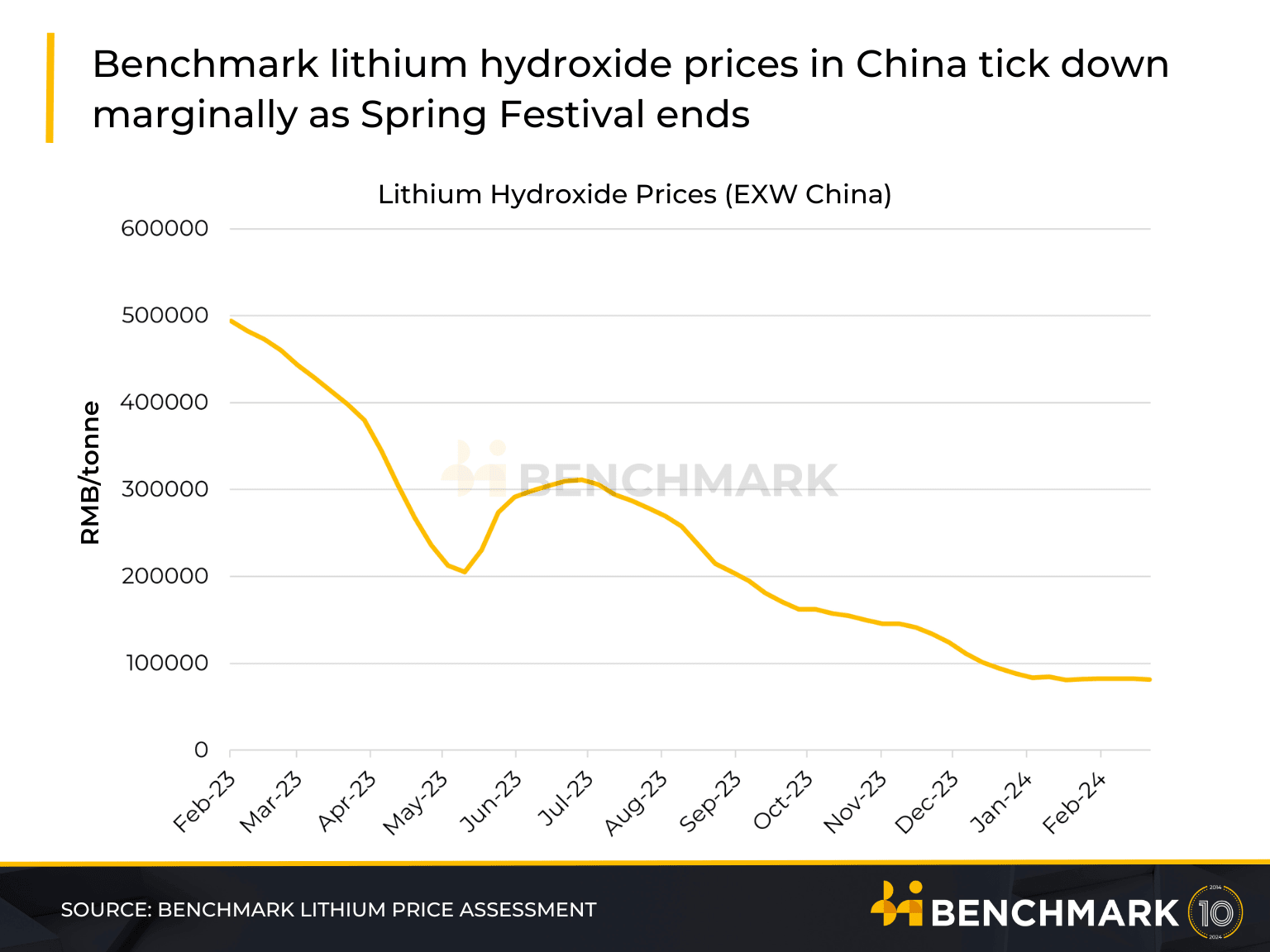
ILiAD I think will be some of the cheapest lithium that you could produce and will be at the lower end of the cost curve. And we’re pretty comfortable about that. I think customers don’t look more than they have to at the lithium volatility. Natural resources projects are twenty or third year projects, you have to take a long term view on price. I don’t think anyone believed $80,000 a tonne was going to be the long term price and I don’t think people believe $10,000 a tonne will be either.
And you mentioned that the supply chain needs to be built up or the manufacturing capacity needs to be built up. What’s the capex like for your technology?
So it’s not too bad. We’re lucky – we can deliver commercial systems today. I actually think that’s one of the differentiating factors. We’ve got blue chip suppliers in our adsorbent manufacturing space. We’ve got two household names, industry names, to manufacture the adsorbent to our specification. They are doing that today. And we delivered a commercial scale system to Compass Minerals.
I think the capital required on the scale up is upstream of us. The trickier question might be when do you form the confidence to invest? Everyone is sort of saying: What do I do first, do I get an order for a large commercial project and then build the supply chain to supply it, or do I build a supply chain and invest quite a lot of money in the hope that the customers are going to turn up?
And if you put a date on it, when do you think DLE is going to make a meaningful impact to supply?
Wow, that’s a great question. A project is probably a two year undertaking from the point where you’ve gone through your testing, you’ve decided on your approach, you’ve placed an order … I would hope that you’ll start to see DLE projects coming online in two to three years and then scaling to make a pretty significant contribution in three to five or six [years].
How important is it to validate the technology on real world brines?
We think it’s important – we think you have to test on real world brines. And we’ve done that. We’ve tested Canadian petroleum brines. We’ve tested Smackover [Arkansas.] We’ve done years of testing here in California on the Salton Sea. And we’ve tested a number of Argentiniansalarsas well. And brine from Europe. So we really have tested the universe.
 >
>  >
>  >
>  >
>  >
>  >
>  >
>  >
>