LME Week 2025 review: Metal markets navigate policy uncertainty and supply disruptions

As the dust settles on LME Week in London, Benchmark reviews some of the key themes that shaped discussions throughout the week and gauges sentiment across metal markets heading towards year end. Across the board, discussions reflected metal markets navigating shifting trade policy, supply-side disruption, and uneven demand recovery.
Copper: Arbitrage and disruption dominate discussion
The CME–LME copper arbitrage remained one of the week’s headline themes. Despite the US choosing not to impose copper cathode tariffs, the spread has stayed unusually wide.
After cathode was excluded from tariff measures, the arbitrage narrowed from over $2,500/t to ~$100/t before rebounding above $300/t. Market sources attributed this to a lingering expectation that tariffs could still come into effect, potentially phased in from early 2027 at 15%, and to CME participants pricing in domestic supply risks, notably the Grasberg disruption.
The US remains the preferred destination for refined copper, with expectations that inflows will continue while the arbitrage persists, even if this leaves material “economically stranded” in US warehouses until stocks draw down or non-US premiums recover.
Mine disruptions at Grasberg, Kamoa Kakula, and El Teniente also featured heavily. Benchmark forecasts production losses totalling 591kt and 295kt across 2025–26 at Grasberg and Kamoa Kakula respectively. Market participants noted rising regional tightness in refined supply, with Southeast Asian premiums increasing by $40/t and European premiums following suit.
Smelters faced renewed scrutiny amid expectations that the copper concentrate treatment charge (TC) benchmark could fall close to $0/t, further tightening margins. Sources suggested tolling or spot-linked models may increasingly replace benchmark contracts as traditional smelting economics come under strain.
Lithium: Cautious optimism, but China’s capacity weighs
Sentiment toward lithium was cautiously optimistic. In particular, demand from energy storage systems (ESS) is buoyant, supporting prices into year end, though China’s latent capacity is expected to the market rangebound in the months ahead.
Market participants noted that strong spodumene appetite continues amid limited lepidolite supply from Jiangxi. Attention turned to CATL’s Jianxiawo mine, with its start-up – whether as soon as next month or delayed to early Q1 26 – likely to influence short-term pricing.
There was broad consensus that the typical seasonal slowdown in Q1 will be observed next year. A rockier picture than hoped was also painted by some regarding EV demand in 2026. Spot markets outside of China remains thinly traded, with limited signs of this picking up in the near term.
Policy shifts also featured prominently, with China’s precursor (pCAM) and cathode active material (CAM) export licence requirements, and the US’s on-off tariff threats, framing broader uncertainty in trade sentiment.
Nickel: Persistent oversupply weighs on outlook
Nickel discussions carried a bearish tone, with broad consensus that oversupply remains entrenched, driven by relentless growth in Indonesian production. Although rising costs may pressure weaker nickel pig iron (NPI) and ferronickel (FeNi) producers, few expect meaningful curtailments in the near term.
Market participants noted that, without decisive Indonesian government intervention – such as export restrictions modelled on the DRC – the surplus will continue. While the long-term demand outlook from the stainless steel and battery sectors remains robust, confidence that demand fundamentals will shift the short-term market balance is minimal.
Indonesia continues to invest in downstreaming, but concerns remain around the pace of ESG improvements and the complexity of meeting international standards. Meanwhile, financing and bringing new, non-Indonesian supply online remains extremely challenging.
Cobalt: Export quotas and restocking fuel bullish sentiment
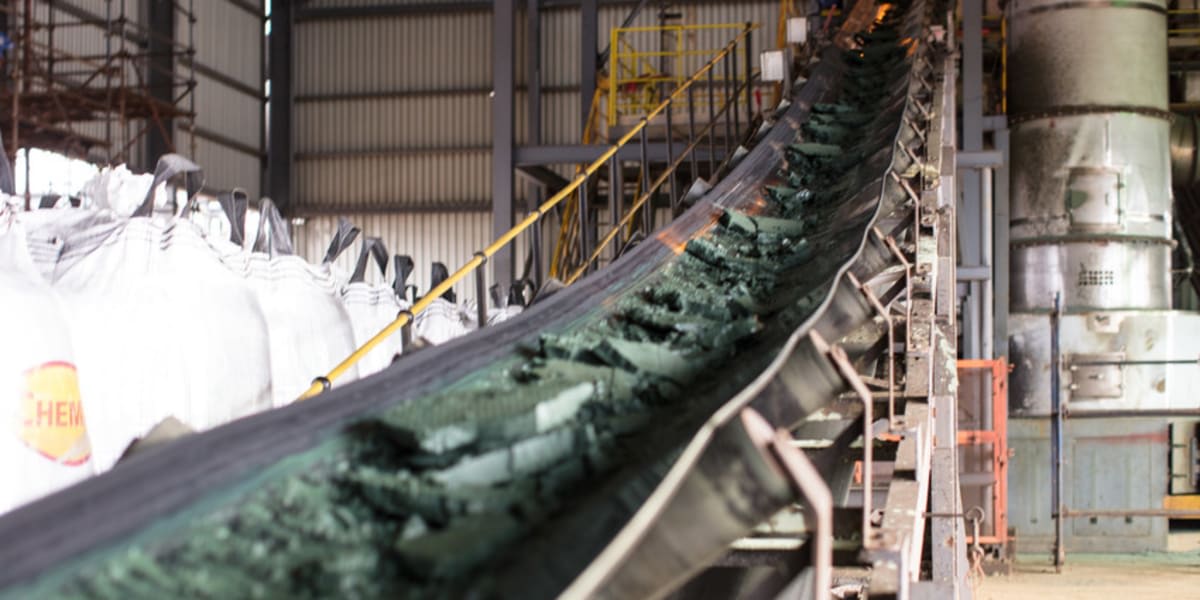
In contrast, cobalt discussions were dominated by rapid price gains, particularly for cobalt hydroxide, which rose by about $1/lb daily through the week, surpassing cobalt metal.
Traders reported robust demand from Chinese refiners for both cobalt metal and cobalt hydroxide, due to the expected delays in material leaving the DRC and Q4 typically being the strongest downstream demand period of the year.
Material is not expected to reach China until February, prolonging tightness through Q4. Estimates on ex-DRC stocks vary widely – from 40kt to 100kt – but much of this inventory is reportedly concentrated among a few major players, most notably Glencore.
Overall sentiment was strongly bullish for cobalt into year end, with further restocking rounds anticipated and potential for additional price spikes.
 >
>  >
>  >
>  >
>  >
>  >
>  >
>  >
>