Benchmark London Summit 2025: Key takeaways

As Benchmark’s London Summit 2025 drew to a close this week, it was clear the global battery and critical minerals industry has entered a new era defined by industrial maturity, geopolitical tension, and capital competition.
Across a packed one-day programme, speakers from Benchmark and leading industry figures examined demand trends, the evolution of battery chemistries, supply diversification beyond China, and financial innovation to unlock capital for new projects globally.
In this article, Benchmark explores the major takeaways and recurring themes that ran through the discussions at the London event.
Demand accelerates, technology consolidates
Global battery demand is set to grow 25% year-on-year to reach 1.7TWh in 2025, according to Benchmark forecasts. Although global EV sales continue to break records, the balance between mobility and stationary storage is shifting, with energy storage now representing 20% of global battery demand – driven by AI infrastructure buildout and the electrification of industry.
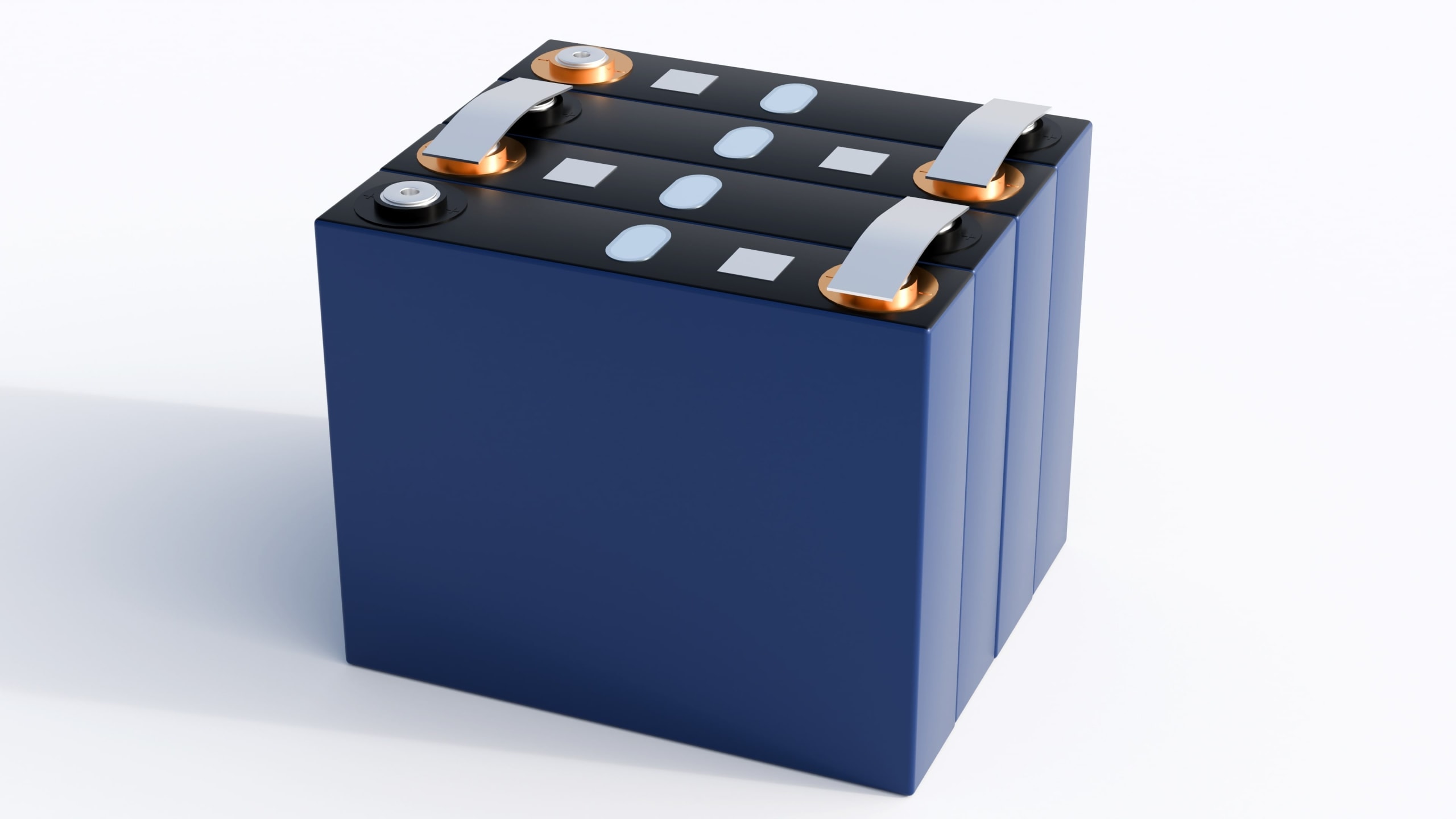
This growth comes at a time of record low battery prices, which average $57/kWh globally and as low as $40/kWh for energy storage. The resulting affordability has entrenched lithium iron phosphate (LFP) chemistry as the leading formulation, now accounting for over half of global production, with China producing 80% of all LFP cells.
“The world’s largest energy and technology corporations are rewriting strategies to align with unprecedented demand growth from energy storage,” remarked Iola Hughes, Benchmark’s Head of Research.
This cost compression and chemistry shift signal a market moving from expansion to maturity, one defined by fierce competition, localisation strategies, and an emerging focus on next-generation technologies such as sodium-ion and flow batteries, especially for long-duration energy storage applications.
Supply diversification and energy security take centre stage
In a series of discussions under the theme “Energy Security and Critical Minerals: Global Challenges, Regional Realities,” speakers outlined how China’s dominance remains entrenched across the value chain, from raw material refining to cell production. But the tone at the Summit reflected a new intensity in global diversification efforts.
Europe’s Critical Raw Materials Act, with its domestic mining, processing and recycling targets, and the US’s EXIM Bank–backed strategic investment drive, both reflect mounting urgency to reduce dependency. In parallel, Latin America was repeatedly highlighted as a key region for critical minerals, especially lithium and copper.

“The US and Europe are becoming more directly involved in critical mineral projects as they seek to reduce dependency on China for materials which are crucial for the energy transition,” said Adam Webb, Benchmark’s Head of Energy Raw Materials.
Case studies from Japan and South Korea’s partnership-based financing models underscored the growing importance of regional collaboration to secure material supply, while the paradox of China’s Anti-involution Policy Campaign, aimed at reducing domestic overcapacity while exporting surplus, has added fresh volatility to global markets.
Capital costs, risk, and the financing challenge
Despite robust demand, global financing for upstream and midstream supply remains constrained. Speakers from across the finance community agreed that high borrowing costs (10%–20% outside China, compared to near-zero rates within it) continue to stifle project development.
Panellists outlined strategies combining minority-equity stakes with technological integration, while citing low liquidity and policy instability as barriers to attracting institutional funds.

Amidst volatile commodity prices, the need for better tools to manage price risk was consistent. Delegates championed long-term offtake contracts, contracts for difference (CFDs), and emerging derivative markets as essential tools to stabilise investment.
Regional realignment: Latin America and the copper imperative
The Summit shone a spotlight on Argentina’s growing role as both a copper and lithium producer. Through its new RIGI incentive framework, the Argentine government has created an investment-friendly mining regime, offering tax incentives, foreign exchange flexibility, and stability clauses extending up to 30 years.
Projects like Rio Tinto’s $2.7bn Rincon Project and McEwen Copper’s Los Azules, backed by Stellantis and the International Finance Corporation, illustrate how the country is aligning regulatory reform with sustainable development. Los Azules is aiming for carbon neutrality by 2038 with a 73% reduction in Scope 1 and 2 emissions.
“Recent supply disruptions underline copper’s market fragility and the growing need for new greenfield projects to sustain future supply,” said Mike Finch, Benchmark’s Head of Strategic Initiatives.
These developments highlight a structural rebalancing in global resource geography, one that positions Latin America as a cornerstone of future energy security while reinforcing copper’s central role as “the backbone of electrification.”
 >
>  >
>  >
>  >
>  >
>  >
>  >
>  >
>