Rich nations’ pledge could help nickel producer Indonesia go green
On the sidelines of this year’s G20 summit in Bali a coalition of rich nations and financial institutions- among them US, Canada, the European Union and Japan- agreed to provide $20 billion to Indonesia to accelerate its shift to renewable energy.
The Just Energy Transition Partnership (JETP), the second of its kind after a similar deal with South Africa last year, promises the funding over three to five years, to help Indonesia retire its coal-fired power plants early, and accelerate the deployment of renewable energy.
The deal could help the world’slargest nickel producerclean up its electricity mix, which would in turn help improve the carbon footprint of nickel processing for batteries. The agreement calls for renewables to account for 34% of Indonesia’s energy mix by 2030 and to peak power sector emissions by 2030.
Although this sum is only a small fraction of what Indonesia needs to successfully complete its transition, these investment commitments are also likely to attract further funding, some experts saying up to ten times more than what is already on the table.
Indonesia is becoming a key player in the global battery supply chain. In a recent interview withThe Economist,President Joko Widodo reiterated that he is in talks with Tesla’s chief executive Elon Musk to build a battery factory in the country.
Also at the sidelines of this year’s G20, a deal was struck between China’s battery maker Contemporary Amperex Technology (CATL), Chinese investment company CMB International (CMBI) and Indonesia’s sovereign wealth fund to finance a $2 billion “green fund”. It will provide financing for building and strengthening an end-to-end value chain for EV production in Indonesia.
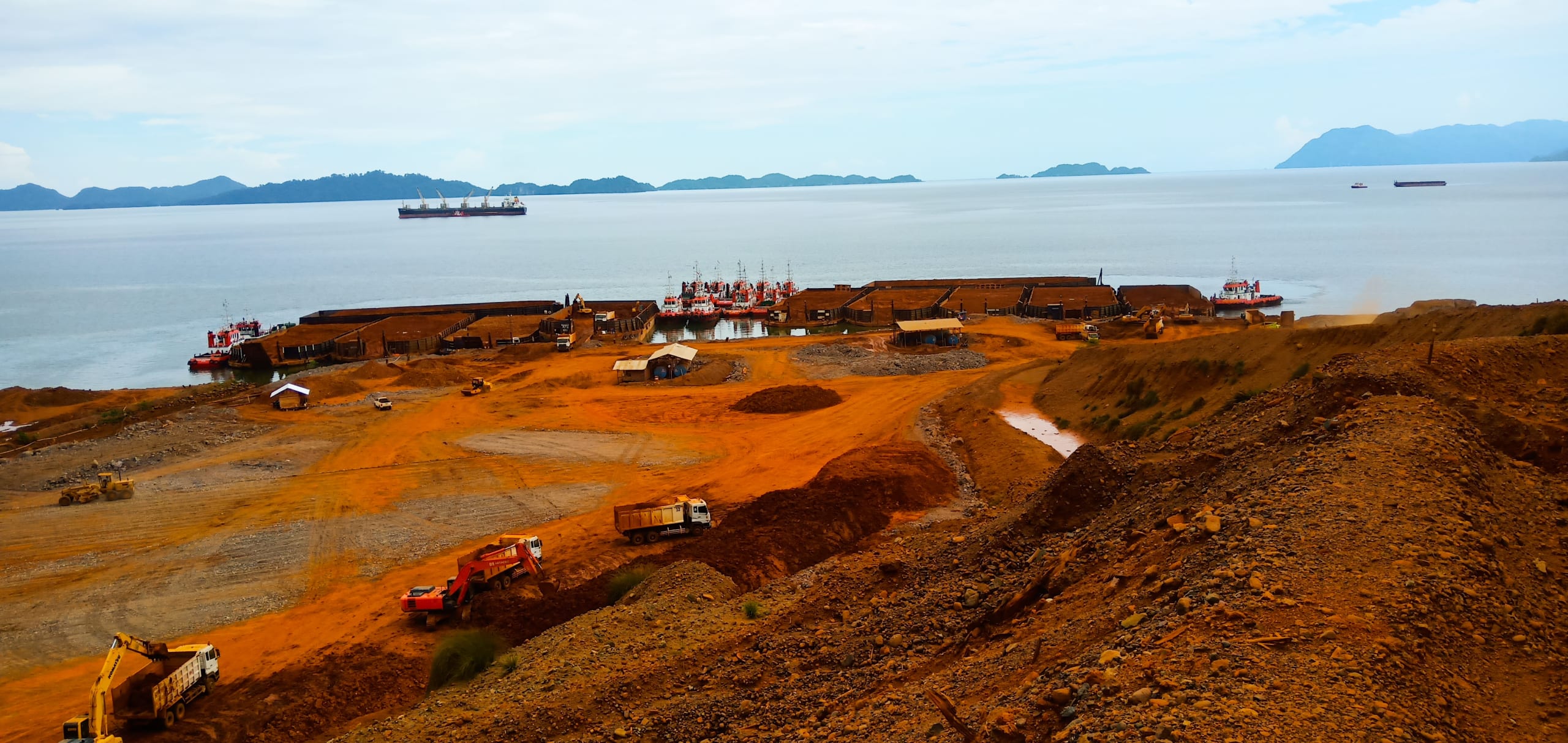
Indonesia is the world’s largest producer of nickel and is on track to becomethe world’s second largest cobalt producer by 2030, with a projected thirty-fold increase in production this decade.
Yet coal powers 60% of Indonesia’s electricity, compared to 12% for renewables. The country is the world’s fourth-largest producer of coal and Southeast Asia’s biggest gas supplier.
The JETP is one step forward to helping clean that up – though much more progress will be needed.
Nickel producers are still buildling their own coal-fired power plants to provide power to processing plants. A Chinese producer, Ningbo Lygend, said this month that it intends to build a 60 megawatt coal-fired power plant for the expansion of its high-pressure acid leaching (HPAL) plant in Obi Island, which makes nickel for electric vehicle batteries.
The company only said it “may also consider” construction of solar photovoltaic facilities in the future to “supplement” the power from coal-fired power plants.
Carbon cost ofnickel production
A large proportion of the nickel products currently produced in Indonesia are nickel pig iron (NPI) and ferronickel, more suited to the stainless steel industry than for battery cathode production. NPI can be upgraded into nickel matte for the battery industry.
Life cycle analyses by Benchmark show that nickel sulphate produced from nickel matte, via laterite ores, in Indonesia and processed in China has CO2 equivalent emissions of 97 tonnes per tonne of nickel contained in the sulphate.
This is 1.6 times more carbon intensive than the equivalent process in Brazil (such as by Vale) with processing in Canada, with most of the emissions occurring in the country where the mineral is first mined and initially processed into intermediates.
Of the carbon emissions associated with the Indonesian/China nickel product, 94% comes from the mining and use of the rotary kiln-electric furnace (RKEF) used to produce the intermediate material in Indonesia. Only 6% is associated with the transport to and processing in China.
The other route to process nickel, high-pressure acide leaching (HPAL), is not without its downsides either. Although HPAL in Indonesia is up to five times less carbon intensive than the RKEF process, the toxicity to ecosystems can be as much as three times worse owing to the high quantities of sulphuric acid needed, as assessed in Benchmark’s upcoming Nickel ESG report.
A reduction in the proportion of coal in Indonesia’s energy mix, supported by the JETP, will, however, lower the global warming potential of the process.
If 100% renewable energy is used for the ferronickel route it will result in a 37.8% reduction in global warming potential, if 34% renewable energy is used (which is the JETP goal) it will lead to a 8.7% reduction.
If 100% renewable energy is used for HPAL processing it will result in a 13.6% reduction in global warming potential, if 34% (which is the JETP goal) it will lead to a 3.2% reduction.
Although this is a notable improvement that will help to decarbonise the sector, direct emissions from the processes and their reagents (coal for ferronickel and limestone for HPAL) still account for more of the global warming potential than electricity.
Therefore, while cleaning up the electricity mix in Indonesia will reduce scope 2 emissions, the direct emissions from the processes themselves, or the scope 1 emissions, remain high.
Learn more about Benchmark’s ESG services
To learn more about Benchmark’s ESG analysis services for cobalt, lithium, nickel and graphite, please fill out the followingform.
 >
>  >
>  >
>  >
>  >
>  >
>  >
>  >
>