UK battery pipeline shrinks after Britishvolt collapse
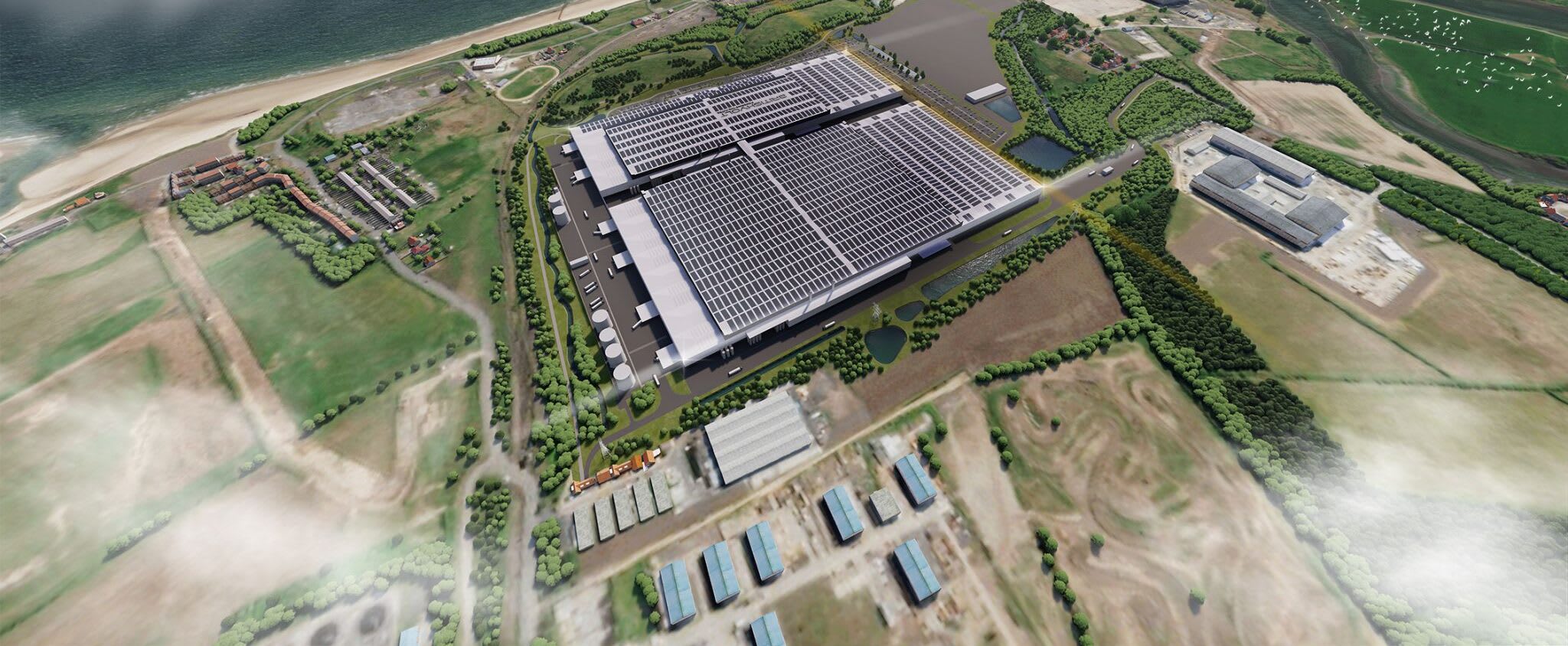
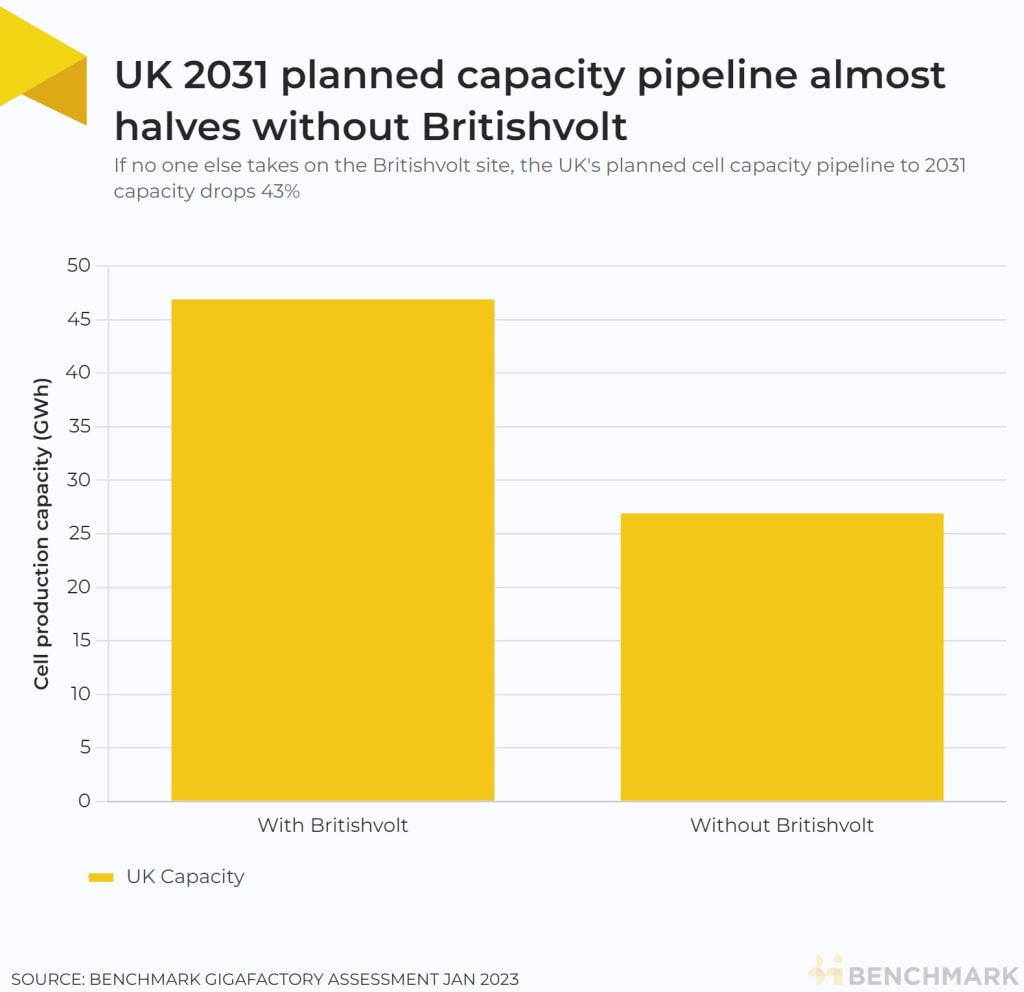
The collapse of battery startup Britishvolt will halve the UK’s futurebattery production capacity, dealing a blow to the country’s hopes to build a homegrown industry to supply its carmakers.
The UK-based company had planned to build a battery factory in the North East of England with a total capacity of 38 gigawatt-hours a year. The entirety of the UK’s cell capacity pipeline is now set to come from China’s Envision, which plans to build a 35 GWh plant in Sunderland.
The UK was already set to be a bit-player in Europe, but without Britishvolt the country is now forecast to account for just 2.3% of Europe’s 2031 battery production capacity.
“Britishvolt’s demise only now leaves China-based Envision as the saviour of the UK’s ambition to be a leader in electric vehicles,” Simon Moores, Benchmark’s chief executive, said. “The UK is in desperate need of more.”
UK’s diminishing battery scene
Prior to the collapse of Britishvolt, the UK accounted for 0.6% of the global battery pipeline capacity set to come into production by 2031. It is now even lower at around 0.3%.
At the end of 2022, Envision began construction on its second British gigafactory. The company, which is led by Zhang Lei, acquired Nissan’s battery business in 2018.
The company, AESC, already operated a 1.9 gigawatt-hour capacity gigafactory in Sunderland, supplying Japanese automaker Nissan with batteries for its Leaf electric vehicles.
Britishvolt was to be the UK’s first homegrown battery maker and planned to build its gigafactory in Blyth, Northumberland. Initially planned to begin production in 2023, a series of setbacks led to a revised production start date of 2025.
“Sadly for the UK, the euphoria in political spheres got the better of the on-the-ground reality,” Moores said. “Making lithium ion batteries isn’t easy, especially at scale.”
Although Britishvolt’s collapse is a blow toBritish batteries, the site on which it was to build its gigafactory could be an attractive proposition for other battery hopefuls. With an abundance of renewable energy, access to rail infrastructure, and a deep port, the site is well-placed for developing a green gigafactory.
Beyond batteries, theUK also has a nascent presence in the supply chain. Cornwall has lithium resources that several companies are looking to exploit and Green Lithium, a lithium developer, announced Teesside, UK as the location of its upcoming lithium hydroxide refinery.
Oil and gas company Phillips 66 produces coke, a precursor to synthetic graphite, in the Humber region of the UK and Vale operates a nickel refinery in Wales.
Britishvolt’s rise
Britishvolt was founded at the end of 2019 by Orral Nadjari, a former investment banker. The aim was to become a world leader in the sustainable production of lithium ion batteries.
Initially, the company planned to build its gigafactory in the Vale of Glamorgan, Wales but changed to Blyth, England in late 2020. Construction began in the summer of 2021. Around the same time, commodity giantGlencore investedinthe company.
In early 2022, theUK government announcedit would support Britishvolt with a£100 million grant, with the money becoming available as the company hit certain milestones.
Britishvolt’s fall
The startup failed to hit the milestones set out by the UK government, however, and was therefore denied access to any of the funds to help keep it afloat.
Other than a handful of arrangements to design and manufacture batteries for automakers such as Lotus and Aston Martin, there were no firm customers.
“It’s a lesson in putting the money into the ground and building a product, supply chain and end customer base first,” Moores said.
With a skyrocketing payroll, few potential customers, and increasing losses, the company struggled to find new investors. Glencore threw the company a less than £5 million lifeline at the end of last year.
To learn more about Benchmark’s monthly Gigafactory Assessment and quarterly Lithium ion Battery Database subscriptions fill in thisform.
 >
>  >
>  >
>  >
>  >
>  >
>  >
>  >
>