Rio Tinto on track to be second largest lithium miner by 2035

Mining giantRio Tinto could become the second largest lithium minerglobally following its acquisition of a minority (49.99%) stake in a joint venture with Chilean state miner, Codelco, to develop a 50,000 tonne lithium carbonate equivalent (LCE) project on the Maricunga salt flats inChile’s Atacama region.
Rio Tinto will contribute $900 million to the project, spread over multiple tranches until 2030.
Further bolstering the Anglo-Australian company’s lithium ambitions is the Argentinian government’s approval of its $2.5 billion Rincon project. This is the first mining project to be approved underArgentina’s incentive regime for large investments(RIGI).
Rio Tinto’s lithium rise
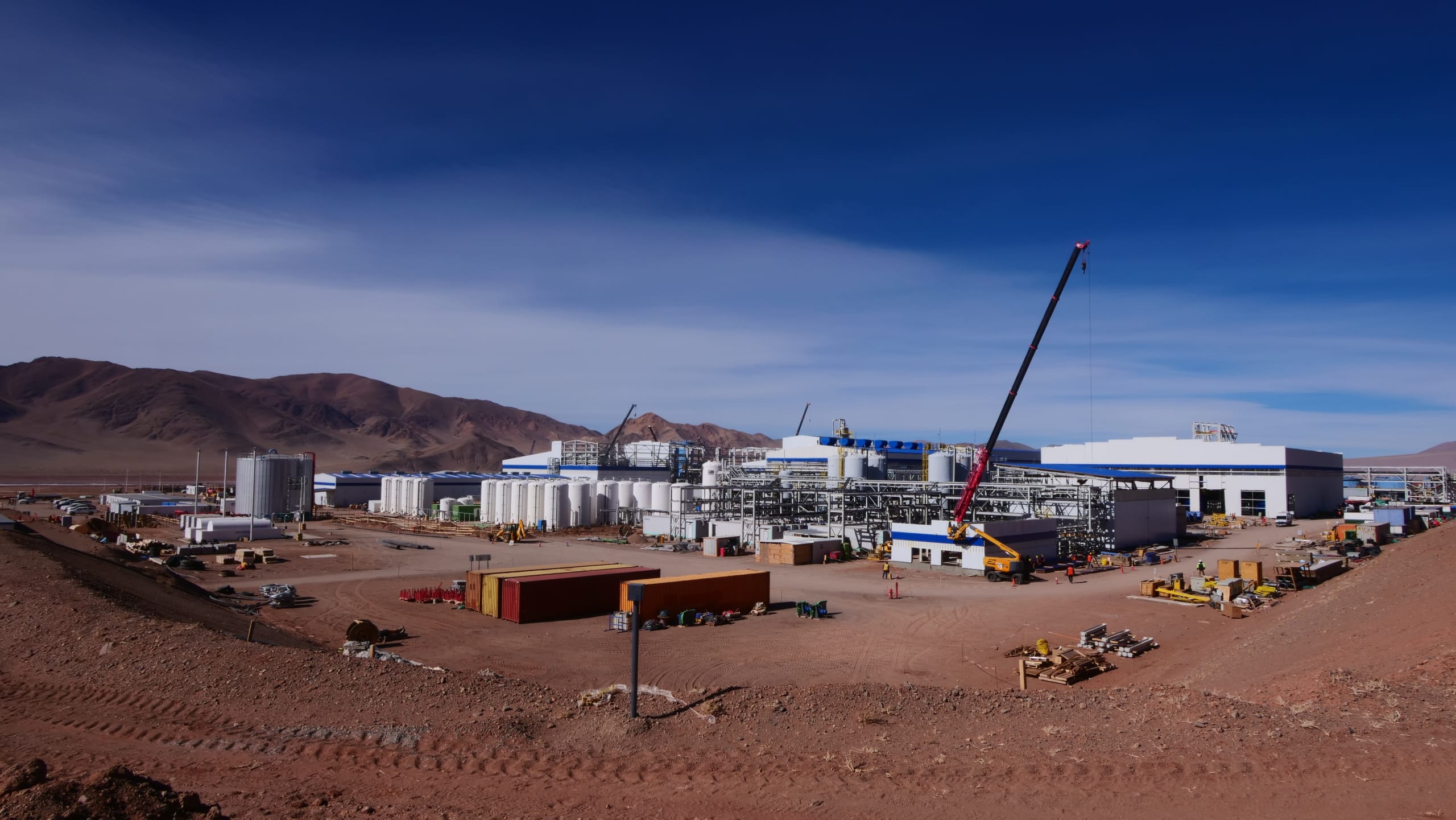
Rio Tinto produced its first lithium at the Rincon project inArgentina’s Salta provincein November 2024 from the 3,000 tonne LCE starter plant. In December 2024, the company announced a $2.5 billion investment to develop the 57,000 expansion facility.
The project uses direct lithium extraction (DLE), which the company says improves water conservation and reduces waste.
The RIGI framework provides tax benefits to companies and is designed to improve stability for long-term projects.
The largest boost to Rio Tinto’s lithium pipeline came when it finalised theacquisition of Arcadium Lithiumin March 2025.
This gave it access to the Hombre Muerto project, also in Argentina, which has been operational since 1997. The first phase has a 22,000 tonne LCE capacity and a 10,000 tonne LCE expansion came online last year. An additional 70,000 tonne LCE is planned through several more expansions.
Rio Tinto is also theJadar hardrock project in Serbiathough this has faced significant setbacks due to local protests against its development.
The first phase (20,000 tonnes LCE) of the Maricunga project with Codelco is due online in 2030 and will use evaporation techniques. The second phase (30,000 tonnes LCE) will use DLE.
Codelco supports Chile’s ambitions
As a state-owned miner, Codelco is fundamental to Chile’s lithium ambitions toreverse the decline in its shareof the global lithium market.
In 2030,Codelco will take a 50.01% stake in SQM’s Salar de Atacama project—the largest lithium mine in the country. Although this project currently uses traditional evaporation methods, SQM and Codelco aim to utilise DLE technology in the future.
Codelco was also recently awarded a special lithium operating contract (CEOL) by the Chilean government to jointly develop a DLE project on the Ascotan salt flat with French miner Eramet and Chilean chemicals producer Quiborax.
Although the extensive portfolios of Rio Tinto and Codelco could create synergies, there is also a risk of resources being stretched too thin and neither have significant experience in operating commercial lithium assets.
“The main challenge is in prioritisation,” said Federico Gay, Benchmark’s principal lithium analyst. “There are many fronts open for both companies, in a moment when justifying large investments for lithium is challenging.”
Submit your details below to request more information about Benchmark’s industry-leading lithium intelligence, including Price Assessments, Forecasts, Sustainability Reports and Consultancy services.
 >
>  >
>  >
>  >
>  >
>  >
>  >
>